Do you need a license to sell skincare? What each market actually asks for
Search for whether you need a license to sell skincare and most results describe a certificate that does not exist. No major market issues a cosmetics selling license, and no regulator hands you a framed document that says you are allowed to trade. What does exist is a short list of permits, filings and named responsibilities — and the awkward part is that most of them belong to you rather than to your factory. Here is what each market asks for, in the order you will meet it.
The short answer
No. There is no cosmetics license that a brand applies for and then displays. The FDA does not license cosmetic products or the companies that sell them. The European Union does not either. The United Kingdom kept the same structure after Brexit, with a different portal. Anyone selling you a “cosmetics license” is almost always selling a registration service with a certificate designed to look official.
The confusion comes from one word doing the work of three questions. Is my company allowed to trade at all? May this product be placed on this market? And is the factory allowed to make it? Only the first is a license in the ordinary sense, and it comes from a company registry and a tax authority rather than a cosmetics regulator. The first two are yours to own. The third belongs to the factory.
This article is about the seller’s side. The product-side rules, and why an “approval” is not among them, are set out in what the FDA rules actually say.
License, registration, approval: three words, three things
Six documents get called a license in this industry. They are issued by different bodies, and only two of them are about you.
| What people call it | What it actually is | Who holds it |
|---|---|---|
| Business license | Registration of a company, plus tax registration. Issued by a company registry, not a cosmetics regulator. | You |
| Resale certificate | A state-level permit that lets you buy stock without paying sales tax and collect it at retail. | You, if you sell in the United States |
| Facility registration | A filing naming the site that manufactures the product. A notification, not a review. | The factory |
| Product listing or notification | A filing naming the product, its ingredients and the party responsible for it. | The brand, or the responsible person acting for it |
| Manufacturing license | Permission for one specific site to manufacture cosmetics, within a defined scope. | The factory, for its own address |
| Marketing approval | Does not exist for cosmetics in any of these markets. | Nobody |
Before the product: the permits that let you trade
The company. Register the entity where you are. That entity signs the supply contract, holds the product listing and appears on the label as the party responsible. If you intend to sell in the EU, the entity carrying that responsibility has to be established inside the EU — the point that most often forces a structural decision early.
The resale position. In the United States a seller needs a state sales tax permit, and a resale certificate so that wholesale purchases are not taxed twice on the way to the consumer. It is state-level, not federal, and it has nothing to do with the FDA. Many first-time brand owners meet it only when a supplier asks for the certificate.
The importer of record. Buy on FOB terms and arrange your own freight, and you are the importer — a role rather than a certificate, carrying the customs entry, the duty and the responsibility for what is in the container. Many first orders are quoted CIF or DDP so the seller handles it, which is convenient, and also means nobody on your side has read the label. Know which you are signing.
Selling into the United States
Since MoCRA, two filings are mandatory for most products: the manufacturing facility registers itself, and the product is listed under the responsible person. Before MoCRA the FDA’s registration system was voluntary, which is where a great deal of outdated advice comes from. The provisions became enforceable in 2024, registration is renewed every two years, and changes must be reported within 60 days.
Neither filing is an approval. The FDA does not see your formula before you sell, and nobody issues a decision you can quote on a website. What the filings do is create a paper trail that has to point at a named party — and for a brand owner, that party is usually you. A foreign brand can appoint a US agent to act in the role, but the obligation does not disappear because someone else files. That person also carries safety substantiation and reports serious adverse events within 15 business days.
The label carries the rest: ingredient disclosure in INCI order, descending by weight down to 1%, with everything below 1% listed after those above it; net quantity; the name and address of the manufacturer, packer or distributor; country of origin on imports. Fragrance can currently be declared as “fragrance” or “parfum” rather than broken out — allergen disclosure is still moving through rulemaking, so the label you print now may not be the one you need in two years.
One exemption is worth knowing precisely: small businesses below the statutory sales threshold are exempt from GMP and from registration and listing, but not from adverse event reporting, and not for products that are injected, used internally, or intended to alter appearance for more than 24 hours.
Selling into the EU and the UK
The EU has the closest thing in this industry to a license, and it is not a document. It is a person. Under the EU Cosmetics Regulation a product may only be placed on the market if a Responsible Person is established in the Union. Without one there is no lawful route to sell, and a brand outside the EU cannot appoint itself.
That person holds the Product Information File, keeps the Cosmetic Product Safety Report prepared by a qualified safety assessor, notifies the product on CPNP before first placement, and is the address printed on the pack that an authority writes to. The file is kept for ten years after the last batch. Manufacturing has to meet GMP — in practice ISO 22716. None of it is reviewed in advance: CPNP is a notification, not an application. What the system does is make one named entity answerable, which is a stronger constraint than an approval would be.
The UK mirrors the structure with its own Responsible Person, its own notification service and retained regulation. A UK notification does not cover the EU, and an EU notification does not cover Great Britain. Sell in both and you need both — usually two versions of the artwork as well.
What your factory’s license covers, and what it does not
Our factory holds a cosmetics production license for this site, issued against the categories we are approved to manufacture, valid to 26 March 2031. It is a real license, it is checked at audit, and it belongs to us. It does not transfer to you, and it does not make your product compliant in your market. A factory license answers “may this site make this”, never “may you sell this”.
The certificates work the same way. Our quality system is certified by Bureau Veritas to the FDA Cosmetic GMP Guidelines (2020), and separately to ISO 22716. Both are certifications of a site against a published standard. Neither is a marketing authorisation and we do not describe them as one. They are on the factory page with certificate numbers and expiry dates, because a buyer should be able to check them rather than take our word for it.
What is worth asking for is the join between documents and order: the scope on the license against the products you are buying, the address on the certificate against the address on the quotation, and who signs the batch record. Where the address differs, ask why before you pay a deposit — that gap is the most common signature of a reseller, covered in manufacturer or trading company.
Where the check actually happens: the label
Whatever the file says, compliance becomes visible on the pack — to a customs officer, to a marketplace reviewer, to a customer with a phone camera. Four fields cause most of the trouble: the order of the ingredient disclosure, the lot code that ties a unit back to a batch record, net quantity in the units the market uses, and the name and address of the responsible party.
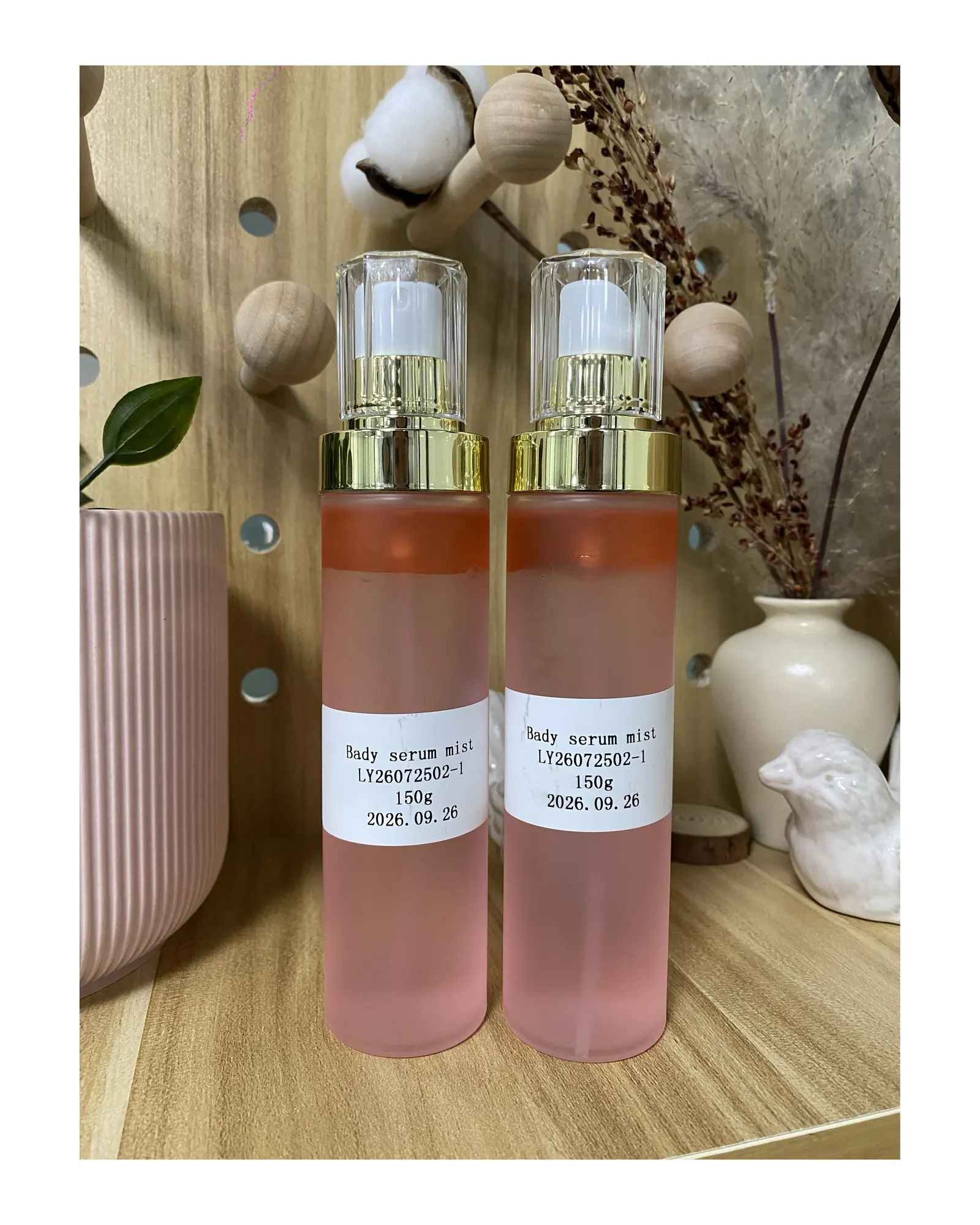
This is also the part that goes wrong quietly. An artwork file approved in a hurry. A translation that reorders the ingredient list. A carton printed before the destination market was fixed, so the responsible party address is missing and the run has to be over-labelled by hand. Label errors are found late by nature: after printing, after freight, at the border.
The practical defence is sequencing, not diligence. Decide the markets and the exact front-of-pack wording in the brief, before the formula is locked and long before artwork goes to print. Both change the formula, the test plan and the label, which is why our six-step process front-loads them.
Four reasons a first shipment gets held
- No responsible person was nominated. In the United States the product listing then has no owner; in the EU the product cannot lawfully be placed on the market. A week to fix, or a quarter if it is discovered at the port.
- The front of the pack makes a drug claim. “Repairs”, “treats” and similar wording move a cosmetic into a regime that does have pre-market requirements. The formula did not change; the sentence did.
- The safety file was commissioned after the artwork. A Cosmetic Product Safety Report needs the formula, the percentages and packaging compatibility data — which is how a date slips six weeks for no technical reason.
- Nobody owned the import. The goods arrive, the broker asks who the importer of record is, and the answer is a supplier who sold on FOB terms.
What to send us
If you are still working out whether you need a license to sell skincare where your customers are, that is the right moment to ask — before artwork, not after. Send us:
- The markets you sell in now, and any you plan to add within twelve months
- Which legal entity will be the seller, and whether it is established in the destination market
- The exact wording you want on the front of the pack, not a description of it
- The product type and packaging format you have in mind
- Target quantity and the date you want to be on shelf
We manufacture to order — 100% custom, no stock formulas — with a minimum of 1,000 units per SKU; containers carry their own minimums, which are usually higher. Samples take 7–10 days. The categories are under skincare OEM, and a brief goes through the contact form.
If you are launching a private-label skincare brand, our skincare OEM/ODM page covers what needs a licence in each market and what does not.
Related articles
Selling into more than one market?
A license to sell skincare is really a set of filings, and they multiply with every market you add. Tell us where you plan to sell and what the front of the pack will say, and we will tell you which filings apply, which we can support, and which you will need to own yourself.