Private label hair care manufacturers: what the factory actually needs from you
Private label hair care manufacturers can quote a shampoo from almost nothing, which is exactly why so many first briefs stall. The quote is easy; the product is not. Six decisions — surfactant system, conditioning load, pH and viscosity, fragrance, closure and the claim you intend to print — set the cost, the timeline and what the bottle is legally allowed to say. None of them can be fixed after the artwork is signed. Here is what each one actually changes, and what a factory needs from you before it can give you a number that holds.
The short answer
A factory needs four things before it can quote honestly: the product type, the market it will be sold in, the claim you want on the front of the pack, and the format you intend to fill into. Everything else is refinement. When one of those four is missing, the quote you get back is either a placeholder or a guess — and a guess becomes a change order three weeks later, when the artwork is already at the printer.
The reason this matters more in hair care than in most categories is that the same bottle of shampoo can be a commodity or a premium product depending on decisions that cost almost nothing to change at brief stage and a great deal to change later. A sulphate-free surfactant system roughly doubles the raw material cost. A different closure can add more to the unit cost than the formula does. A claim printed in the wrong market turns a cosmetic into a regulated drug, and the product has to be reformulated, retested and relabelled.
The six decisions that set everything else
Every private label hair care project we run comes back to the same six levers. They are listed in the order they should be settled, because each one constrains the next.
| Decision | What it sets | Where first briefs go wrong |
|---|---|---|
| Surfactant system | Lather, mildness, and the largest single line in the formula cost | Assuming “sulphate-free” is automatically milder. It is milder, and it costs roughly double. |
| Conditioning load | Slip, weight, and whether the range needs a matching conditioner | Over-loading, which flattens fine hair and reads on the hand as coated rather than clean. |
| pH and viscosity | How the cuticle lies after rinsing, and how the product pours | Setting the viscosity target after the stability run instead of before it. |
| Fragrance | The sensory signature, and a real stability risk in a high-water formula | Choosing the scent last, once the base is already frozen and the cost is locked. |
| Closure and pack | Unit cost, tooling, and the minimum that actually applies | Commissioning a custom bottle before the formula is stable enough to fill it. |
| Claim and market | Whether the product is a cosmetic or a regulated drug, and which tests apply | Writing the claim on the artwork before checking what the destination market allows. |
Why the surfactant system is the cost decision
A shampoo is mostly water and surfactant. The surfactant is what lifts oil from the scalp, and the system you choose decides both how the product feels and what it costs per litre. A conventional sulphate system gives strong lather at a low raw-material cost. A sulphate-free system built on isethionates or glucosides gives a milder wash and a creamier, slower foam, at roughly double the cost.
Neither is better in the abstract. The question is what the bottle promises. If the label says sulphate-free, the system has to be genuinely free of sulphates rather than merely low in them, because that is the one claim a buyer can test at home. A secondary surfactant is usually added for mildness, and a thickener to bring the viscosity back up, since sulphate-free systems are naturally thinner. Those two additions are where the cost of the claim actually sits.
What changes between shampoo, conditioner and mask
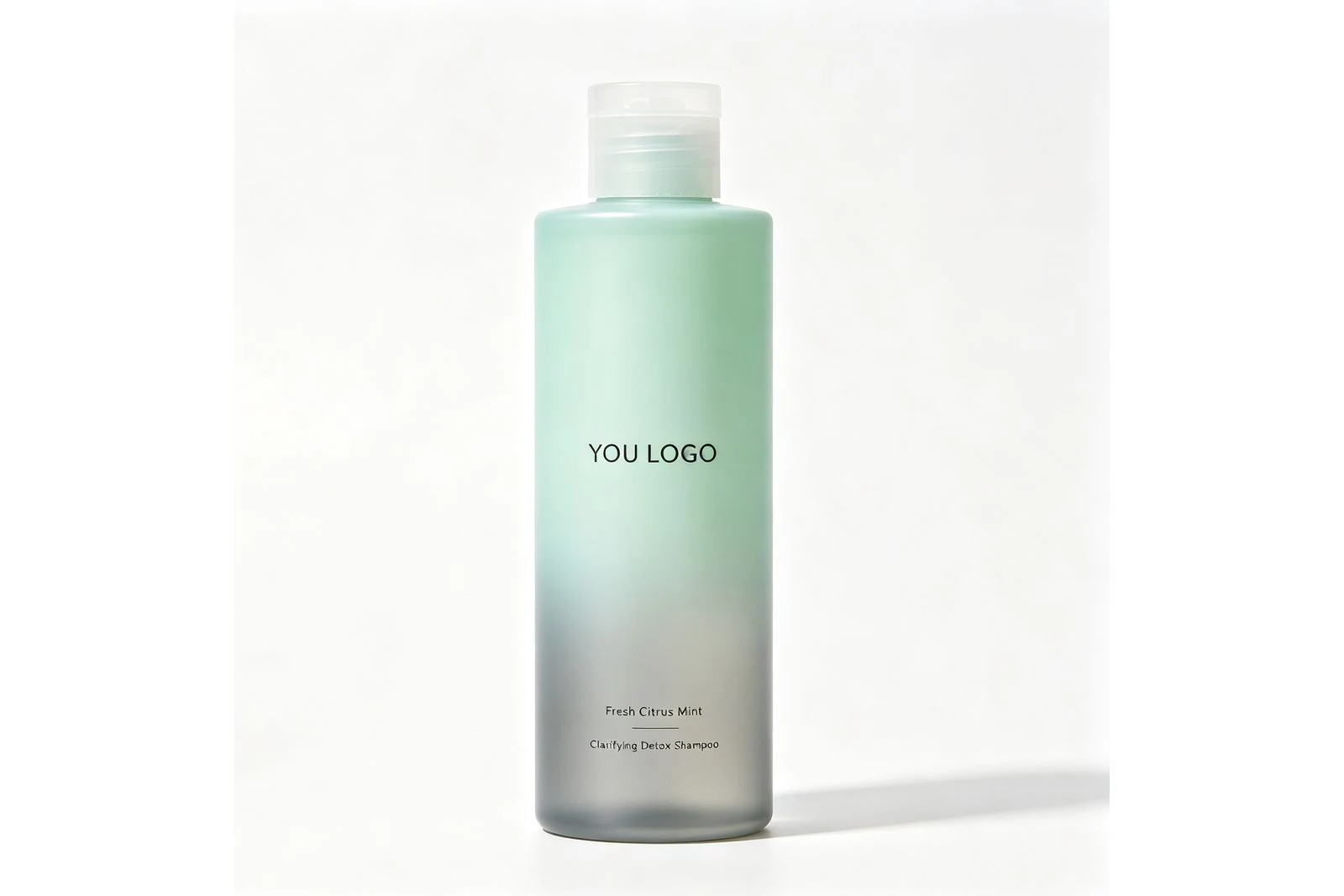
The three formats are not one formula at three thicknesses. A shampoo is a cleansing product that has to rinse out of hair without leaving weight. A conditioner is a deposition product: its whole job is to leave something behind and then stop. A mask is a conditioner with a heavier deposition load and a contact time measured in minutes rather than seconds, which changes the preservative system and the fragrance ceiling.
That difference is why a brand launching a full range should expect three separate development tracks rather than one formula and two dilutions. The shampoo range is usually the entry product, because it is the cheapest to launch and the easiest to extend with scent variants later. The mask is where the treatment claim lives, and it is also where the contact-time question first appears: a product that sits on the scalp for ten minutes has a different safety margin from one that rinses off in thirty seconds.
The claims that change what the product is
In most of cosmetics the claim follows the formula. In hair care there is one claim that reverses that rule: anti-dandruff. In the European Union, zinc pyrithione is no longer permitted in cosmetic products, so an anti-dandruff shampoo built for that market has to use piroctone olamine or climbazole instead. In the United States the same bottle is an over-the-counter drug and needs the matching monograph, which means a different regulatory pathway, different labelling and a different testing plan. A brand that develops one formula for both markets and only later reads the label copy ends up reformulating.
The other claims that deserve a decision before artwork are the ones about strength and thickness. A product positioned around thinning hair sits closest to the boundary of anything in this category, and the wording has to stay descriptive rather than therapeutic. That is a packaging decision as much as a formulation one, and it is far cheaper to get right at brief stage than to reprint.
Packaging: the part buyers underestimate
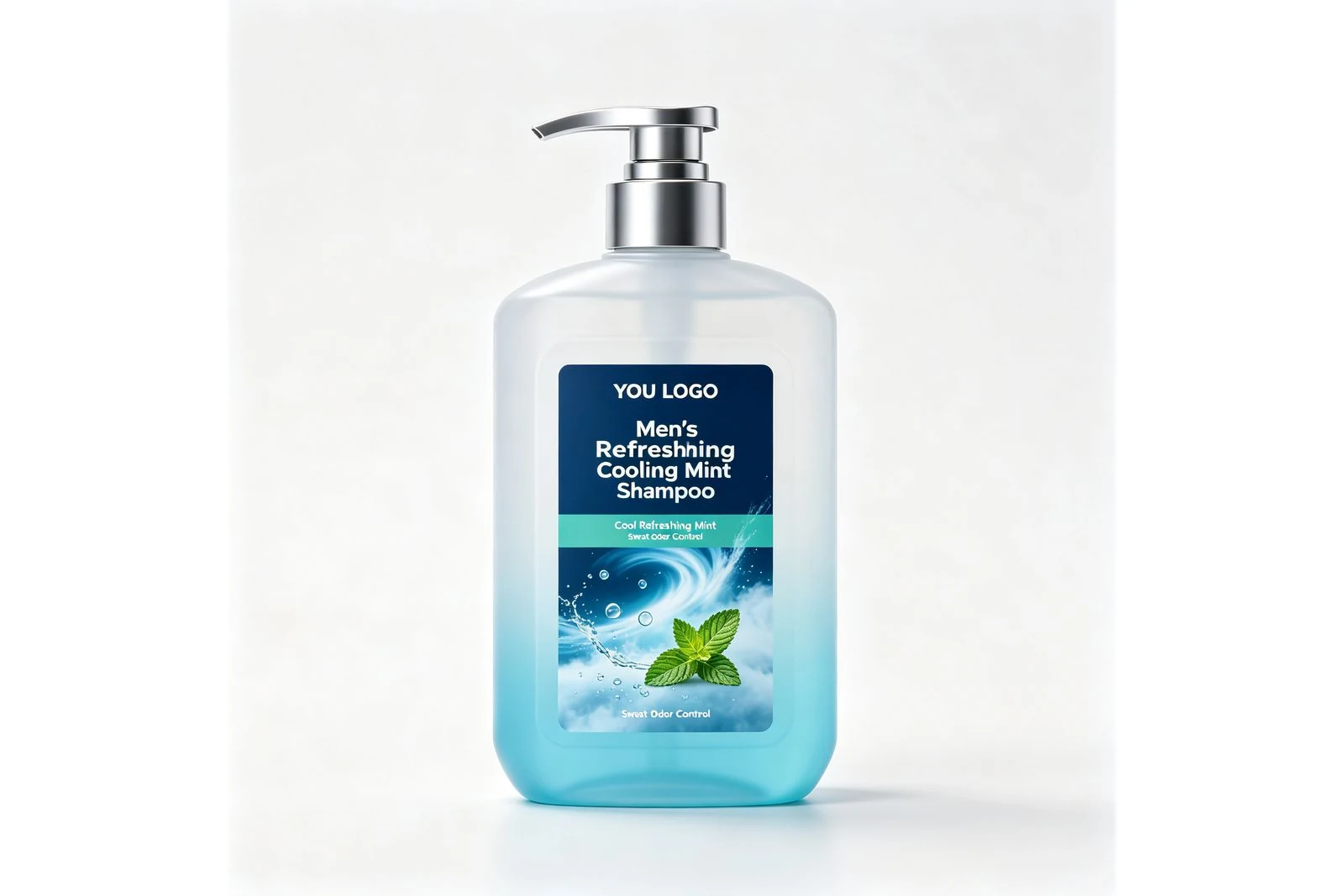
The formula is quoted per kilogram. The pack is quoted per thousand pieces, and the two minimums are not the same. A stock 250, 400 or 500 ml bottle can often be bought in small quantities because the mould already exists and runs continuously. A custom bottle needs a mould, and the moulding run sets the real minimum, which is usually several times the product minimum. The closure is a separate mould with a separate minimum again — a pump, a flip-top and a disc top are three different purchases.
This is why the cheapest-looking pack is sometimes the most expensive first order. A stock bottle with a stock flip-top lets you launch at the product minimum. A custom bottle with a custom pump can multiply the first order before a single litre of product is made. If you want the custom pack, the honest sequence is to launch on stock, prove the product, and move to the custom mould on the second run. Our haircare OEM range is built around that sequence.
MOQ, sampling and the first run
Our minimum is 1,000 units per SKU, and that is a product minimum rather than an order minimum. The pack carries its own minimum on top, as described above, so a project with three scents and one bottle is 3,000 units of product but one pack purchase. Sampling runs at 7–10 days from an approved brief, and the brief is approved when the six decisions at the top of this page have answers.
The most common cause of a slow first order is not the factory. It is a brief that arrives with a reference photo and a retail price and nothing else, so the first sample is really a first question. Two rounds of sampling is normal; three usually means the claim or the market was still undecided. Sending the market and the claim in the first message typically removes one round entirely.
What to send us
A brief that can be quoted on the same day has five lines: the product type, the market or markets it will be sold in, the claim you want on the front of the pack, the format and closure you have in mind, and the quantity for the first run. Add a reference product if you have one, and say whether the pack is stock or custom. That is enough to come back with a formula direction, a pack option and a real timeline.
If you are still choosing between suppliers, the questions worth asking are on the factory page and in how to choose a cosmetics manufacturer. The six-step process shows what happens after the brief is signed, and a brief goes through the contact form. If the product you are building is a fragrance rather than a wash, starting a perfume brand covers the same decisions from the other side.
If you are planning a private-label hair care line, our haircare OEM/ODM page covers shampoo, conditioner and mask development.
The daily shampoo page covers the surfactant choice, the pack and what actually moves the unit cost.
Related articles
Have a hair care brief you want priced?
Send the product type, the market, the claim you want on pack and the first-run quantity. We will come back with a formula direction, a pack option and a timeline — not a placeholder number.