How a skincare product goes from brief to shelf
Skincare has more decision points than any other category we manufacture, and most of them land on the brand owner rather than the factory. This is the whole sequence — eight stages from a written brief to a boxed unit — and what actually has to be decided at each one.
The sequence, and the clock nobody watches
A skincare project runs on two clocks that start at the same moment. One is the formula: brief, sample, revision, approval. The other is the pack: format, tooling, print, delivery. They meet at the pilot run, and if either slips the launch slips with it.
Stage 5 is the one that surprises people. It starts only once the formula is frozen, runs on a calendar rather than a task list, and cannot be bought shorter. A brand that plans backwards from a launch date finds out at the worst possible moment.
“When does stability start, and what has to be true before it can?” Not “how long does a sample take”. The sample is fast. What sets the date is how long the formula has to sit before anyone can honestly say it will still be the same product next year.
Stage 1 — The brief: what a factory cannot guess
A brief is not a description of a feeling. Five things have to be in it, and if one is missing the project drifts until somebody supplies it.
- What it is, in packaging terms. “A serum” is a category, not a product. Dropper or airless? 30 ml or 50 ml? Clear glass or opaque? The pack decides how the formula has to behave before the formula exists.
- Where it will be sold. The EU, the US, the Gulf and Southeast Asia do not allow the same actives at the same levels, or treat the same claim as legal.
- What it sells for. Retail price sets the cost ceiling, the ceiling sets the formula budget, and the budget decides which active system is on the table. Withholding the price does not protect your margin; it guarantees a formula built to the wrong budget.
- How many. Our minimum is 1,000 units. Below that, packaging minimums rather than the formula decide what the project costs.
- What it has to beat. A reference product, a competitor, a photo, a texture you liked.
The most useful sentence in a brief is a comparison. “Like this one, but lighter, and without fragrance” gives a formulator more than a page about “a luxurious sensorial experience”. Rich, light, fast-absorbing and cushiony mean different things to different people, so each has to become a measurable target before a sample can be judged. If the brief itself is not written yet, how to build your own skincare brand covers the five decisions that have to be made before it can be.
Stage 2 — Formula direction: adapt or build
There are two routes: adapt a formula we have already developed, which is faster and cheaper because the base is known, or build a new one from your brief. Who owns the formula, and what you pay up front, is covered in OEM versus ODM — worth reading before this stage, not after.
Either way, this is where the brief becomes targets, and skincare has more of them than any other category: texture (viscosity, spread, after-feel, film); a pH window, which is a formulation constraint as much as a stability one; the active and its level; the preservative system, which any water-containing product needs and which interacts with pH, the pack and the claims you intend to print.
Anhydrous products are the exception worth knowing. A face oil contains no water, so it needs no preservative system at all — which is why an oil is often the simplest product in a range to approve, and why so many first ranges start there. The face care range shows the split: oils and emulsified creams are developed against completely different constraints even when they sit on the same shelf.
Stage 3 — The sample: 7–10 days, and what to do with it
Physical samples are typically ready in 7–10 days from a confirmed brief, with revision rounds until you approve. The timeline is short; the mistake is what happens in the week after the courier arrives.
- Use it for a week. Texture changes as a product warms, and as the surface of the cream in the jar meets air.
- Put makeup over it. Pilling under foundation is the most common defect a five-minute patch test misses.
- Apply it the way your customer will — on a damp face, after a toner. Some emulsifying systems behave very differently on wet skin.
- Test it in the pack it will ship in. A cream that is pleasant in a wide-mouth jar can be unworkable in an airless pump.
- Compare side by side with the reference, ideally without knowing which is which.
Feedback is only useful if it is specific. “It is too rich” leaves the formulator guessing. “It does not absorb before my foundation, and it feels tacky for ten minutes” is a direction. Use the revision rounds rather than approving something you are unsure about.
Stage 4 — Packaging and compatibility
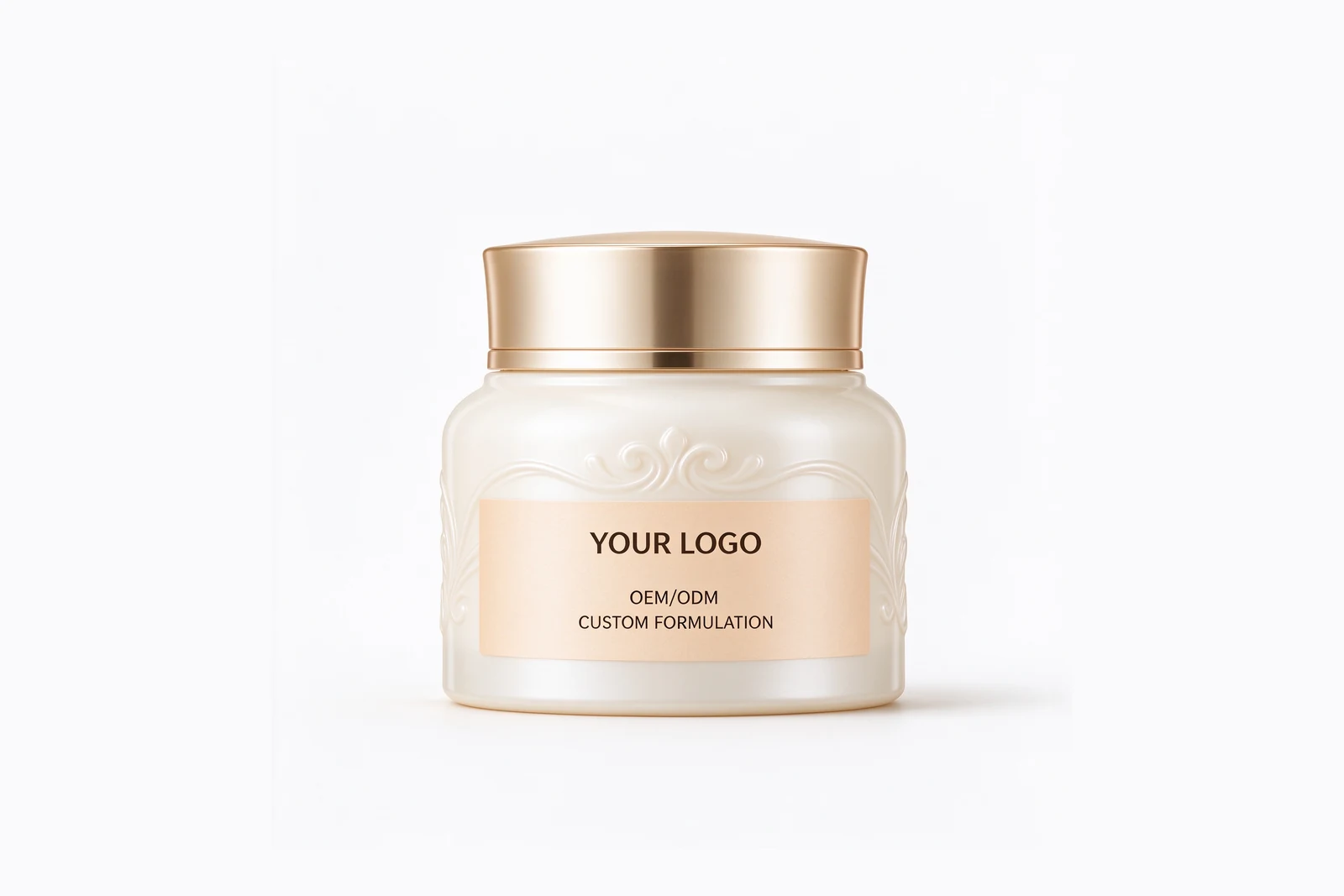
The pack is chosen while the formula is still being revised, because the two constrain each other. The format is not a styling decision:
- Jar — full access, and full exposure to air and fingers. Fine for a rich cream, poor for anything oxidation-sensitive.
- Airless — no air enters and the dose is metered. It costs more per unit, and the formula has to flow at the pump’s shear.
- Tube — cheap, low residual, travel-friendly. Hard to make feel premium — a positioning problem, not an engineering one.
- Dropper — precise and familiar for serums, but only works with low-viscosity formulas.
Compatibility is a separate test from stability, and it is the one that gets skipped when a brand supplies its own packaging. The formula goes into the actual pack and both are checked: migration from the pack into the formula, stress cracking, weight loss through the closure, dose accuracy, torque on the cap. Some combinations that look fine on paper fail here.
Artwork runs on its own track: dieline, then artwork, then a printed proof. Approve the proof, not the PDF. The cost logic is the same one that governs perfume packaging: tooling, print minimums and the number of components you specify.
Stage 5 — Stability: the stage that sets the date
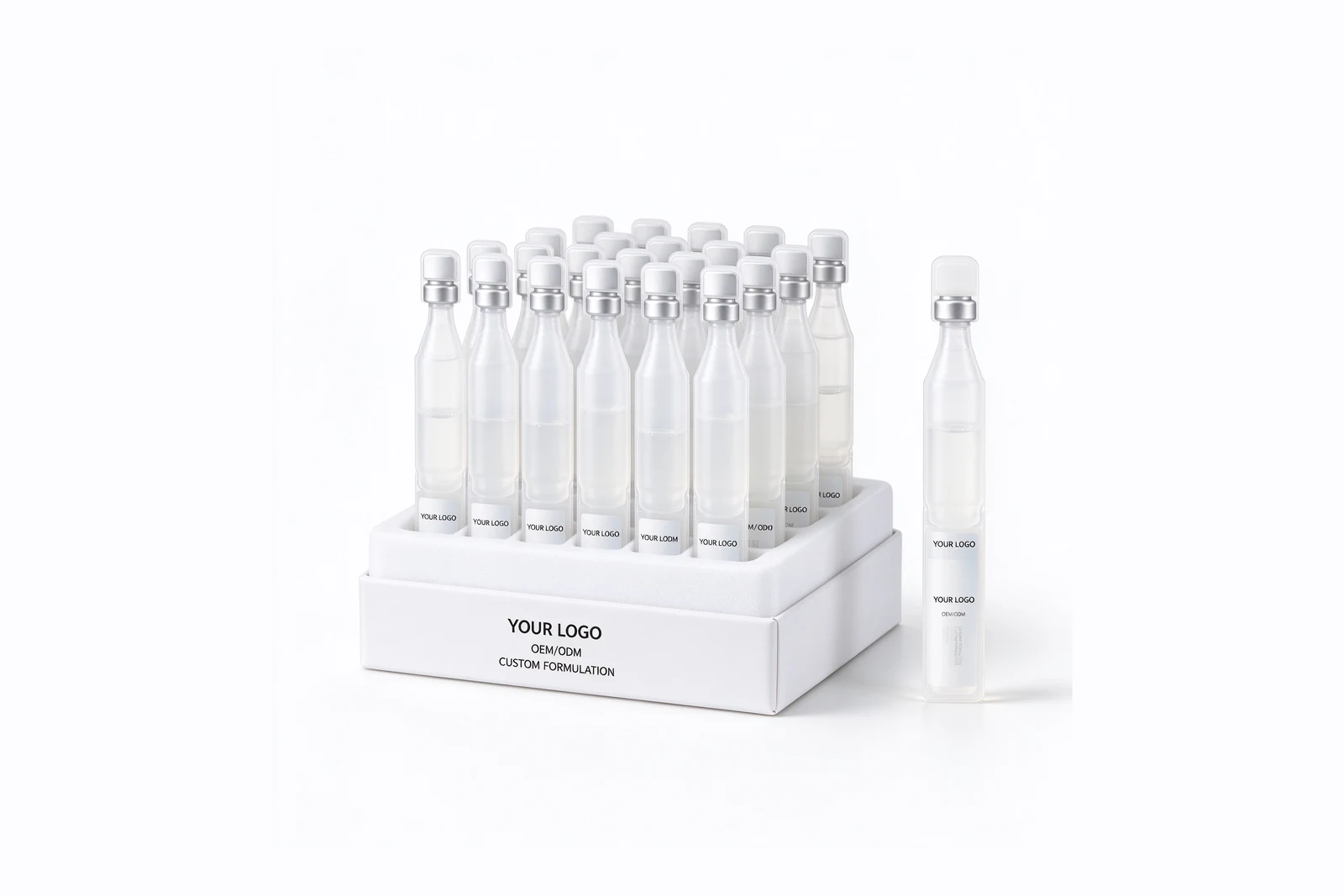
Once the formula is frozen it goes into testing: accelerated stability at elevated temperature, freeze–thaw cycling, light exposure, centrifugation, preservative efficacy against microbial challenge, and compatibility with the pack. Some of it runs in parallel, some of it cannot.
This is a calendar, not a task. You cannot compress it by paying more. A cream that separates at 40 °C in a stability oven will separate in a container in a Gulf summer, and finding that out after 5,000 units are on a pallet is not a packaging problem — it is the launch.
Two consequences follow. Approving a sample is approving a direction, not releasing a product. And if stability fails, the formula changes and the clock restarts.
Stage 6 — Pilot run and sign-off
A pilot run confirms the formula behaves the same way at production scale as it did in the lab. Mixing shear, emulsification temperature, cooling rate and filling viscosity all change when a batch goes from two kilograms to two hundred, and a formula that was perfect in a beaker can turn grainy in a production tank.
You sign off against a retained sample — the approved standard. Ask for it to be labelled with the date and batch and kept: it is the reference for the run, for any dispute about the run, and for the reorder six months later.
Stage 7 — Filling, labelling and packing
Production runs against the approved standard, with checks at defined points: raw materials verified on arrival, first-article approval before the line starts, in-process checks through mixing, filling and packing, and finished product testing at the end. Our filling area is a Class 100,000 cleanroom, and line clearance between products is part of the record.
The check that catches most problems is the least glamorous: the applied label. Artwork approval covers the file, not the label that actually went onto the jar — position, orientation, whether it sits straight, whether the batch code printed legibly over it. Look at the first finished box, not the proof. Then the secondary pack — carton, insert, wrap, export shipper — where every extra component is another minimum .
Stage 8 — Documents, and what ships with the goods
Goods leave with the paperwork that belongs to that order: the batch record and certificate of analysis, the safety data sheet, the packing list and commercial invoice, and a certificate of origin where required. These are prepared for your order — not factory certifications, and the difference matters when a buyer asks.
The factory certifications are separate: the site runs to ISO 22716 and is certified to the FDA Cosmetic GMP Guidelines (2020). Both describe the quality system the product was made under. Neither is a product approval, and neither replaces what your market requires before the product can be sold.
That catches out first-time exporters. In the EU a cosmetic cannot be sold until a Product Information File exists, a Responsible Person is named and the product is notified through CPNP — an obligation that sits with the brand, not the factory. We prepare the technical content; the filing is yours, usually through a consultant.
Where skincare projects go wrong
- A brief with no price ceiling. The formula is built to a budget nobody stated, and the retail price turns out to be impossible at stage 4.
- Approving a sample that was never put in its pack. The formula was right; the combination was not.
- Treating stability as paperwork. It is the only stage that can invalidate everything before it.
- Changing artwork after the print run. The most common avoidable cost in the category.
- Ordering packaging before the formula is signed off. Fill weight, viscosity and preservation all move the pack decision.
How we run a skincare project
We develop custom skincare at a minimum of 1,000 units, and we do not sell stock formulas — every product is built to the brief. Samples are typically ready in 7–10 days from a confirmed brief, with revision rounds until you approve.
The six-step process is the same sequence described from the factory side, with the checkpoint that closes each stage, and the factory in Huadu is where the pilot runs and the filling happen. Trial orders can be scheduled once the sample and the packaging are approved. If you are still choosing a supplier, the twelve questions to ask before you pay a deposit covers what to verify about a factory. This one covers what happens once you have chosen one — and when you are ready, send us the brief.
To take a skincare brief from document to shelf, our skincare OEM/ODM page covers formats, claims and the sampling timeline.
A serum is usually the first SKU in a range, and the face serum page shows how much of the brief has to be settled before sampling.
Related articles
Send us the brief, not the product name
Tell us the product, the market it sells into, the retail price you are aiming at and the quantity. We will come back with a formula direction, a packaging proposal and the points we think will decide your launch date.